My name is Anna, and I’m twenty-four years old. For the past five years, my twin brother Daniel and I have been living a life we never imagined—raising our three younger siblings while trying to figure out adulthood ourselves. But our story doesn’t start with triumph or success. It starts with abandonment, heartbreak, and a father who chose his own happiness over his dying wife and five children.
Discover more
LEMONADE
Comics
Robe
Dog
Family games
I still remember the exact moment everything changed. I was eighteen, fresh out of high school, sitting at our kitchen table with college brochures spread out in front of me. Daniel and I were debating which state university had the better dorm options and whether we could swing out-of-state tuition if we both got part-time jobs. We were typical teenagers, worried about typical teenage things—roommates, class schedules, campus food. We thought we had our whole lives ahead of us, neatly planned and full of possibility.
We had no idea that within weeks, we’d be making decisions about custody hearings, medical bills, and how to explain death to a five-year-old.
The Morning Everything Started to Crumble
It was a Tuesday morning when Mom made pancakes. I remember because she always made pancakes on Tuesdays—it was her little tradition, her way of bringing something predictable and warm into our busy household. But that morning, something was off. She burned them, which she never did, and when she apologized, her smile didn’t quite reach her eyes.
“I’ll do better tomorrow,” she said, flipping the blackened pancakes onto a plate.
I hugged her and told her they were perfect anyway. My younger siblings—Liam, Maya, and Sophie—were nine, seven, and five at the time. They were too young to notice the tremor in Mom’s hands or the way she kept pausing between sentences like she was gathering strength for the next word. Daniel caught my eye across the kitchen table, and I could see the same worry reflected back at me.
By Friday, we were sitting in a sterile medical office with beige walls and fluorescent lighting that made everyone look half-dead already. A doctor with kind eyes but a grave expression used words I didn’t fully understand but instinctively feared: “Cancer. Aggressive. Treatment.”
Discover more
LEMONADE
Comics
Family games
Dog
Robe
Daniel reached under the table and squeezed my knee hard—our silent code for “I’m here, we’re going to get through this.” Dad sat in the chair next to Mom, but he might as well have been in another state. He kept checking his phone, scrolling through messages, his jaw tight and his eyes distant. I remember thinking he was probably just processing the news in his own way, dealing with shock differently than the rest of us.
I was so naive.
The Betrayal That Shattered Our Family
Three days later, Dad called a family meeting. He gathered all of us in the living room on a Sunday evening—Mom, Daniel, me, and the three little ones. Sophie climbed onto the couch with her stuffed rabbit. Maya sat cross-legged on the floor. Liam positioned himself near the doorway like he was ready to bolt at the first sign of trouble. Even at nine years old, he had good instincts.
Family games
Dad didn’t sit down. That should have been my first warning sign. He stood by the door with his arms crossed, already positioned for an exit.
“I’ll keep this short,” he said, his voice flat and rehearsed.
The room went silent. Mom’s face went pale. Daniel’s hand found mine.
“I’ve been seeing someone,” Dad continued, not quite meeting anyone’s eyes. “For a while now.”
Maya gasped audibly. Sophie buried her face in her stuffed rabbit. Liam’s eyes went wide, darting between our parents like he was watching a car crash in slow motion. I felt like the floor had dropped out from under me. My brain couldn’t process what I was hearing. Mom had just been diagnosed with cancer—aggressive cancer—and Dad was confessing to an affair?
But he wasn’t finished.
“I can’t do this,” he said, gesturing vaguely toward Mom without actually looking at her. “I’m not strong enough to watch her get sick. I deserve some happiness too.”
Daniel shot to his feet, his fists clenched. “So what, you’re just leaving? Right now? While she’s sick?”
Dad shrugged—actually shrugged—like we were discussing something as trivial as what to have for dinner.
“I’m going to live with her. She gives me love and joy. I can’t live in constant sadness.”
I looked at Mom, expecting tears, expecting screaming, expecting something. But she just sat there, perfectly still, her hands folded in her lap. The absence of her reaction hurt more than any breakdown would have. It was like she’d already known, already accepted that this was who he was.
“What about the kids?” I asked, my voice cracking. “What about Liam and Maya and Sophie? They need you.”
Dad looked at me like I’d asked him to explain quantum physics—confused and slightly annoyed.
“You’re adults now,” he said, nodding toward Daniel and me. “You’ll figure it out.”
And then he went upstairs and packed a bag. No goodbye hugs for the little ones. No promises to call. No explanation to the children who worshiped him. Within an hour, he walked out the front door with a duffel bag over his shoulder, got into his car, and drove away from five children and a dying wife.
That was the last time we saw him for five years.
Learning to Be Parents at Eighteen Years Old
After Dad left, he vanished completely. No phone calls. No text messages asking how treatment was going. No birthday cards for the kids. No money to help with medical bills or groceries or keeping the lights on. Nothing. It was like he’d moved to another country and erased us from his memory.
Meanwhile, Mom got sicker. The aggressive treatment made her even smaller, frailer. Her beautiful auburn hair fell out in clumps. Her voice grew softer each day until sometimes we had to lean in close just to hear her. Daniel and I created a system—when I stayed overnight at the hospital, sleeping in the uncomfortable chair beside her bed, he stayed home with the kids. When he took the night shift, I made sure Liam got to baseball practice, Maya finished her homework, and Sophie had someone to read her bedtime stories.
One night, about three months into treatment, Mom reached for my hand in the dim hospital room. Her fingers felt like bird bones, delicate and fragile.
“Promise me something,” she whispered, her eyes searching mine.
“Anything, Mom. I promise.”
“Don’t let them take the kids away. Keep them together. Promise me they’ll stay together.”
Daniel was standing on the other side of the bed, and he stepped forward immediately.
“We will,” he said firmly. “I swear to you, we’ll keep them together.”
She smiled at us—a real smile, full of relief and love and heartbreak all mixed together. It was the last smile I ever saw on her face.
She passed away two weeks later, on a gray October morning while Daniel and I were both there holding her hands. The nurse told us it was peaceful, that she wasn’t in pain at the end. I don’t know if that was true or just something they tell families to make it easier. Either way, at eighteen years old, we became orphans and guardians in the same moment.
The Courtroom That Changed Everything
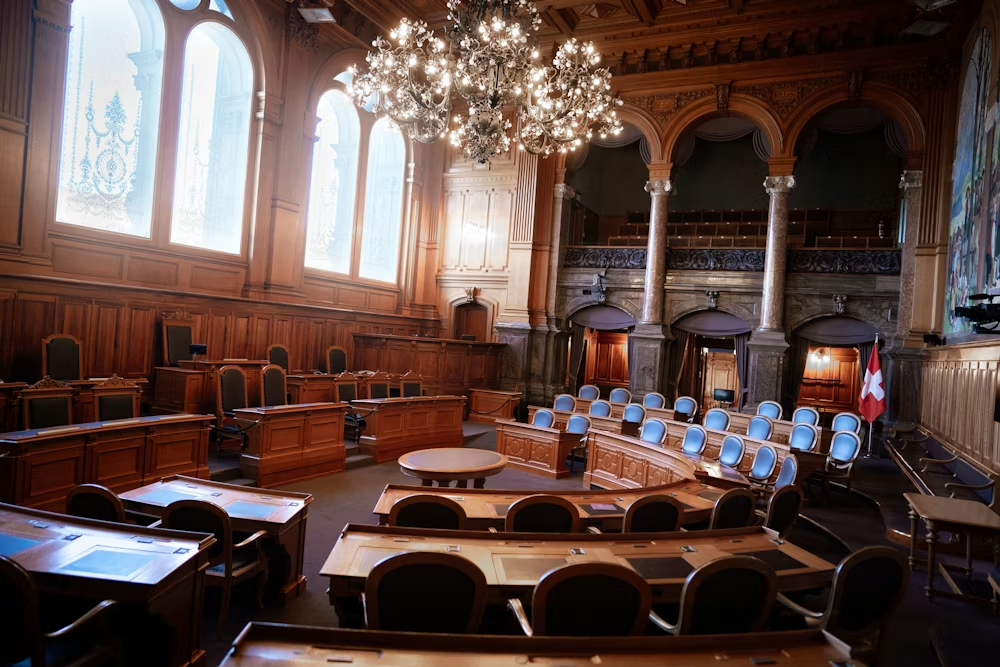
The legal process of gaining guardianship of our siblings was simultaneously straightforward and terrifying. We had to stand before a judge and convince her that two barely-adult twins could provide a stable home for three young children. We had to prove we had income, housing, and the maturity to make medical decisions and attend parent-teacher conferences.
Discover more
LEMONADE
Dog
Family games
Robe
Comics
The judge looked exhausted that day, like she’d heard too many tragic stories and seen too many broken families.
“Do you understand the responsibility you’re taking on?” she asked, her eyes moving between Daniel and me. “This isn’t temporary. This is raising children to adulthood.”
Daniel nodded without hesitation. “Yes, Your Honor. We understand.”
“So do I,” I added, trying to sound more confident than I felt.
The gavel came down with a sharp crack that echoed through the courtroom. Just like that, we went from grieving siblings to legal guardians. No training period. No instruction manual. Just court papers, three shell-shocked kids, and a future we had to figure out one day at a time.
Standing there in that courtroom, holding official documents instead of college acceptance letters, I had absolutely no idea that the hardest parts were still ahead of us.
Five Years of Survival Mode
The years that followed are difficult to describe because they didn’t feel like individual years at all. Time became this strange, fluid thing where weeks blurred together and months passed in what felt like minutes. We were in pure survival mode, moving from one crisis to the next, making impossible choices and hoping desperately that we were doing the right thing.
Daniel and I enrolled in community college because it was the only option that made financial and logistical sense. The campus was twenty minutes from home, the class schedules were flexible, and the tuition was something we could manage between our jobs and Mom’s small life insurance policy. We spent countless nights at the kitchen table with our laptops open, calendars spread out between us, coffee mugs multiplying like rabbits.
“If I take morning classes Monday, Wednesday, and Friday, I can do school drop-off,” I said during one of our planning sessions.
“Okay, then I’ll work construction early on those days and be back by three for pickup,” Daniel replied, scribbling notes in the margins of his calendar.
“And Liam has that dentist appointment Thursday at four.”
“I’ll move my afternoon shift. I can probably pick up extra hours Saturday to make up for it.”
That became our existence—decisions made not based on what we wanted but on an intricate puzzle of what the kids needed. If one of us had a major exam, the other stayed home to manage homework, dinner, baths, and bedtime. If one of us picked up an overtime shift, the other handled the parent-teacher conference or the school play or the doctor’s appointment.
We learned to switch roles seamlessly, without discussion or negotiation. We just did what needed to be done.
I worked as a waitress at a local diner on evenings and weekends. I learned to smile through aching feet and rude customers who snapped their fingers at me like I was a servant. I learned which regulars tipped well and which ones would leave two dollars on a fifty-dollar bill. Daniel worked construction in the early mornings, hauling equipment and doing manual labor that left him exhausted. When money got really tight, he picked up overnight shifts stocking shelves at a warehouse.
Sometimes we passed each other in the hallway at dawn—him coming home as I was getting ready to take the kids to school.
“You going to sleep?” I asked one morning, taking in his red-rimmed eyes and dirt-stained clothes.
“Eventually,” he said, rubbing his face. “I need to shower first. And maybe eat something.”
Sleep became something we grabbed in short bursts. Two hours here. Three hours there. We survived on cold coffee, adrenaline, and the sheer force of will that comes from knowing three small humans are depending on you to keep it together.
Every unexpected expense felt like a personal attack. When the refrigerator died in the middle of summer, I stood in the kitchen staring at it like it had personally betrayed me.
“We’ll fix it,” Daniel said calmly, though I could see the stress in the set of his shoulders.
“We don’t have the money for a new fridge,” I said, doing the math in my head and coming up short.
“We’ll find it. We always do.”
We never let the kids see the fear. That was our unspoken rule. They had clean clothes for school, even if we stayed up until midnight doing laundry. They had packed lunches with actual fruit and vegetables, even if Daniel and I ate ramen for dinner. They had birthday cakes, even if they were homemade and slightly lopsided because I’m a terrible baker.
Sophie’s seventh birthday was one of those moments I’ll never forget. We couldn’t afford a party at one of those indoor playground places or a fancy bakery cake. So I made a chocolate cake from a box mix, and it came out uneven and a little sunken in the middle. But I covered it with frosting and arranged the candles carefully, and when Sophie blew them out, she threw her arms around my neck.
“This is the best birthday ever,” she said, her voice full of pure joy.
I had to turn away so she wouldn’t see my eyes filling with tears.
Our house was crowded and loud and perpetually messy. There were always backpacks by the door, shoes in the hallway, artwork covering the refrigerator. But it was stable. Safe. Full of love, even when we were exhausted. Daniel and I became a well-oiled machine. We didn’t argue about who did more or keep score of who sacrificed what. There was no time for that, and honestly, it didn’t matter. We were in it together.
Slowly—painfully slowly—things began to improve. We finished our degrees. Not in four years like we’d planned. Not without setbacks and failed classes and semesters where we could only afford to take one course each. But we finished. Daniel found steady work as a project manager at a construction company. I got a position doing administrative work at a medical office. The paychecks became more reliable. Bills didn’t make my chest tighten quite so much anymore.
The house felt lighter. The kids smiled more. There was more laughter, more talk about the future. Liam started high school and joined the debate team. Maya discovered she loved art and spent hours drawing in sketchbooks we bought her. Sophie, now ten years old, was confident and happy and completely unaware of how close we’d come to losing everything.
We thought the worst was behind us. We really did.
The Knock That Changed Everything
It happened on a Saturday morning in late spring. I was making pancakes—continuing Mom’s tradition—when a loud knock echoed through the house. The kind of knock that demands attention. Aggressive. Impatient.
I wiped my hands on a dish towel and walked to the front door, expecting a package delivery or maybe a neighbor. I opened it, and for a split second, my brain couldn’t process what I was seeing.
Because standing on our porch, looking older but essentially the same, was the man who had walked out on five children and never looked back.
https://googleads.g.doubleclick.net/pagead/ads?gdpr=0&us_privacy=1—&gpp_sid=-1&client=ca-pub-6408964155191381&output=html&h=280&slotname=4722138829&adk=4007935190&adf=1536152651&pi=t.ma~as.4722138829&w=929&fwrn=4&fwrnh=100&lmt=1768626616&rafmt=1&format=929×280&url=https%3A%2F%2Fhealthyxyz.net%2Fmy-brother-and-i-raised-our-three-siblings%2F&host=ca-host-pub-2644536267352236&fwr=0&fwrattr=true&rpe=1&resp_fmts=3&aieuf=1&aicrs=1&uach=WyJXaW5kb3dzIiwiMTAuMC4wIiwieDg2IiwiIiwiMTQyLjAuNzQ0NC4xNzYiLG51bGwsMCxudWxsLCI2NCIsW1siQ2hyb21pdW0iLCIxNDIuMC43NDQ0LjE3NiJdLFsiR29vZ2xlIENocm9tZSIsIjE0Mi4wLjc0NDQuMTc2Il0sWyJOb3RfQSBCcmFuZCIsIjk5LjAuMC4wIl1dLDBd&abgtt=7&dt=1768626571678&bpp=1&bdt=1053&idt=351&shv=r20260115&mjsv=m202601130101&ptt=9&saldr=aa&abxe=1&cookie=ID%3Da4df5fb415dcc8e9%3AT%3D1768581753%3ART%3D1768626573%3AS%3DALNI_Mbrp3IzvbdBYMB2qdMFAuZwl2JUhA&gpic=UID%3D000012e51dd80416%3AT%3D1768581753%3ART%3D1768626573%3AS%3DALNI_MbkCK4zjb4Kdj2Fo3BLZdJ1vEsvyw&eo_id_str=ID%3De2757c1992a9a043%3AT%3D1768581753%3ART%3D1768626573%3AS%3DAA-AfjYkoIb8uUPwWFFSXkALjf3D&prev_fmts=0x0%2C929x280%2C929x280%2C1198x280%2C244x600%2C1455x644%2C929x280&nras=3&correlator=3770564140865&frm=20&pv=1&u_tz=-420&u_his=2&u_h=823&u_w=1463&u_ah=783&u_aw=1463&u_cd=24&u_sd=1.75&dmc=8&adx=108&ady=8380&biw=1455&bih=644&scr_x=0&scr_y=5868&eid=95376582%2C95379902&oid=2&pvsid=5334391453961198&tmod=705763836&uas=1&nvt=1&fc=1920&brdim=0%2C0%2C0%2C0%2C1463%2C0%2C1463%2C783%2C1463%2C644&vis=1&rsz=%7C%7CoEebr%7C&abl=CS&pfx=0&fu=128&bc=31&bz=1&pgls=CAEQARoFNC45LjI.~CAEaAzYuOQ..~CAEQBBoHMS4xNjguMA..&ifi=5&uci=a!5&btvi=5&fsb=1&dtd=44440
Our father.
“Well,” he said, glancing past me into the house with an appraising look. “You’ve managed. I’ll give you that.”
I couldn’t speak. My throat had closed up completely. Daniel appeared beside me almost instantly, like he had some sixth sense that danger had arrived at our door.
“Why are you here?” Daniel asked, his voice cold and controlled.
Dad sighed like this entire conversation was tedious and beneath him.
“I’m done waiting. We need to talk.”
“About what?” I managed to ask, finding my voice.
He looked at me directly for the first time, and I saw no remorse, no shame, no acknowledgment of the five years that had passed.
“About what belongs to me.”
My blood turned to ice. Daniel’s entire body went rigid beside me.
“This house,” Dad continued, straightening his jacket like he was about to close a business deal. “It was bought by your mother and me. After she died, everything became mine. The house, the property, all of it.”
“You’re serious?” Daniel asked, though it wasn’t really a question.
Dad nodded, completely calm. Matter-of-fact.
“I’ve been patient. I’ve given you time. But now I need it back.”
“For what?” I asked quietly, though I already knew the answer would make me sick.
“My life. My girlfriend and I are moving in together, and we need a place. I think you’ve had enough time here. Five years is more than generous.”
Something hot and violent rushed through my chest. My hands went numb. I wanted to scream at him. To tell him he had no right to anything in this house. That he’d walked away. That we buried Mom with money scraped together from friends and Daniel’s construction coworkers. That we’d raised his children while he was off living his “love and joy” with some other woman.
But I didn’t.
Instead, I took a slow breath and made a choice.
“Okay,” I said.
Both Daniel and our father stared at me.
“Anna—” Daniel started, his voice sharp with warning.
“It’s fine,” I interrupted, keeping my eyes locked on our father’s face. “If that’s how it is.”
Dad’s shoulders relaxed visibly. He actually smiled, relieved that I was being “reasonable.”
“Good. I knew you’d understand. You were always the practical one.”
“When do you want to come by?” I asked, my voice steady.
“Tomorrow. Around two o’clock. I’ll bring my girlfriend. We’ll go through the paperwork and figure out the timeline.”
“Alright. Come at two. I’ll have everything ready for you.”
He left without another word, walking back to his car with the confident stride of a man who’d just won something.
The moment the door closed, Daniel grabbed my arm.
“What are you doing?” he demanded. “We can’t just give him the house!”
I smiled for the first time since opening the door.
“We’re not giving him anything. We’re setting a trap.”
The Night We Discovered Mom’s Plan
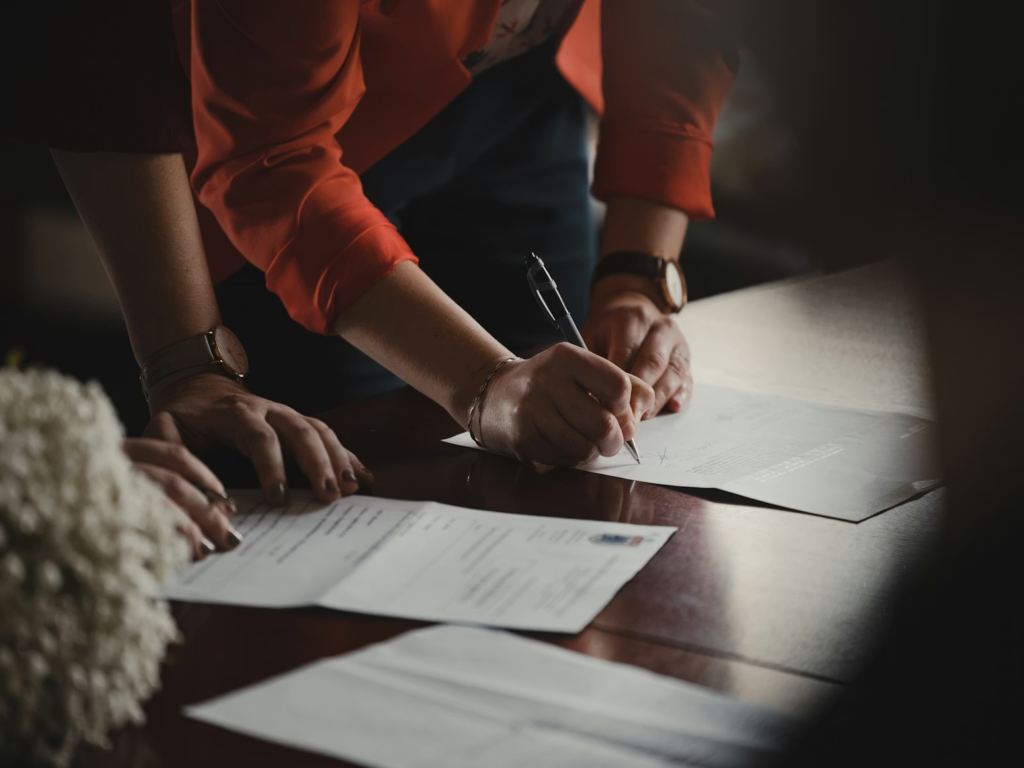
That night, Daniel and I barely slept. We spread every document we had across the kitchen table—papers we’d kept in folders and filing cabinets for years, things we’d never fully looked at because we’d been too busy surviving to organize properly. Court documents from the guardianship hearing. Copies of Mom’s will. Medical records. Insurance policies. Receipts and bills and official-looking papers with legal seals.
“Guardianship order,” Daniel said, pulling out a thick stack of papers. “Court approved it after Mom died.”
“Adoption paperwork,” I added, finding another folder. “We officially adopted them two years ago.”
We worked in silence, sorting and reading until my eyes burned from exhaustion. At some point around three in the morning, I froze, a memory surfacing from the depths of my grief-fogged brain.
Mom, in the hospital. Late at night. Her voice soft and slightly slurred from pain medication. She’d grabbed my hand and pulled me close.
“If anything happens to me, talk to the lawyer. Mr. Henderson. He has documents. Important ones. Promise me you’ll talk to him.”
I’d promised, holding her frail hand. And then she’d died, and we’d been so overwhelmed with everything—the funeral, the kids, the guardianship hearing, just trying to survive—that I’d completely forgotten.
“I think she planned for this,” I said aloud, looking at Daniel. “Mom. I think she knew what he’d do.”
Discover more
LEMONADE
Comics
Dog
Family games
Robe
“What do you mean?”
I told him about the conversation, about the lawyer’s name she’d mentioned. By four in the morning, we’d found Mr. Henderson’s contact information in Mom’s old address book. By nine o’clock, we had an emergency appointment at his office.
The Meeting That Saved Us
Mr. Henderson was an older gentleman with white hair and kind eyes behind wire-rimmed glasses. He welcomed us into his office and listened carefully as we explained what had happened—our father’s sudden reappearance, his claim to the house, his demands.
When we finished, Mr. Henderson nodded slowly.
“Your mother was a very intelligent woman,” he said. “She came to see me shortly after her diagnosis. She wanted to make absolutely certain that you and the children would be protected.”
He pulled out a thick file folder and opened it on his desk.
“She revised her will. She transferred the deed to the house. She set up a trust. She did everything possible to ensure that if your father ever tried to claim anything, he’d have no legal standing whatsoever.”
Daniel and I sat in stunned silence as Mr. Henderson walked us through every document. Mom had thought of everything. She’d known Dad would leave. She’d known he might come back someday wanting something. And she’d made sure we’d be protected.
“The house is yours,” Mr. Henderson said firmly. “Legally and completely. Your father has no claim to it. None.”
“Can you be there tomorrow?” I asked. “When he comes?”
Mr. Henderson smiled—a sharp, satisfied smile.
“I wouldn’t miss it for anything.”
The Confrontation
Our father arrived the next day exactly at two o’clock, just like he’d said. He walked up to the door with confidence, accompanied by a woman I assumed was the girlfriend—someone around his age, dressed in expensive-looking clothes, surveying our house like she was already planning where to put her furniture.
I let them in. Dad barely glanced at the folders arranged on the kitchen table.
“This won’t take long,” he said dismissively. “I’ve already waited long enough. Let’s just get the paperwork sorted so you can start making arrangements to move.”
That’s when Mr. Henderson stepped forward from where he’d been waiting in the dining room.
“Good afternoon. I’m William Henderson, the family’s attorney.”
Family games
Our father blinked, his confident expression faltering slightly.
“Excuse me? I wasn’t aware we needed lawyers for this.”
Mr. Henderson sat down at the table and gestured for everyone else to do the same. The girlfriend looked uncomfortable. Dad looked annoyed. Daniel and I sat down with barely contained satisfaction.
The first document slid across the table.
“This is the deed to the house,” Mr. Henderson said calmly. “As you can see, it was revised eighteen months before your wife’s death. The property was transferred entirely into her name.”
Dad leaned forward, squinting at the paper.
“That’s wrong. This house was in both our names.”
“It was,” Mr. Henderson agreed. “Until your wife legally transferred it. Which she had every right to do.”
Another document appeared.
“This is her will. Also updated. It clearly states that all property and assets were to be held in trust for the minor children, with Daniel and Anna as trustees and guardians.”
“That’s not—” Dad started.
“And these,” Mr. Henderson continued, his voice never rising but carrying absolute authority, “are the guardianship and subsequent adoption filings. All approved by the court. All legally binding.”
Dad stood up halfway out of his chair, his face flushing red.
“She wouldn’t do that. She wouldn’t cut me out like that.”
“She did,” I said quietly, meeting his eyes. “Because she knew you. She knew exactly who you were.”
Mr. Henderson’s voice remained perfectly even and professional.
“Once your wife understood her prognosis, she took comprehensive steps to protect her children. Given your abandonment of the family during her illness and after her death—which is well-documented—you forfeited any claim to marital property. The court recognized this when they granted guardianship to your eldest children.”
Dad’s face had gone from red to pale. His girlfriend was already edging toward the door.
“This is ridiculous! I’m her husband. I have rights!”
“You were her husband,” Mr. Henderson corrected. “And legally, you have no claim to this property. None whatsoever. The house belongs to Anna and Daniel, held in trust for all the children.”
Silence filled the kitchen. The kind of silence that feels like pressure in your ears.
“Furthermore,” Mr. Henderson added, gathering his documents, “you are not welcome to remain here. If you refuse to leave, or if you attempt to pursue this matter through harassment or litigation, we will proceed with filing for a restraining order and pursue legal action for abandonment of minor children.”
https://googleads.g.doubleclick.net/pagead/ads?gdpr=0&us_privacy=1—&gpp_sid=-1&client=ca-pub-6408964155191381&output=html&h=280&slotname=2861659254&adk=1485839615&adf=660687438&pi=t.ma~as.2861659254&w=929&fwrn=4&fwrnh=100&lmt=1768626663&rafmt=1&format=929×280&url=https%3A%2F%2Fhealthyxyz.net%2Fmy-brother-and-i-raised-our-three-siblings%2F&host=ca-host-pub-2644536267352236&fwr=0&fwrattr=true&rpe=1&resp_fmts=3&aieuf=1&aicrs=1&uach=WyJXaW5kb3dzIiwiMTAuMC4wIiwieDg2IiwiIiwiMTQyLjAuNzQ0NC4xNzYiLG51bGwsMCxudWxsLCI2NCIsW1siQ2hyb21pdW0iLCIxNDIuMC43NDQ0LjE3NiJdLFsiR29vZ2xlIENocm9tZSIsIjE0Mi4wLjc0NDQuMTc2Il0sWyJOb3RfQSBCcmFuZCIsIjk5LjAuMC4wIl1dLDBd&abgtt=7&dt=1768626571681&bpp=2&bdt=1056&idt=359&shv=r20260115&mjsv=m202601130101&ptt=9&saldr=aa&abxe=1&cookie=ID%3Da4df5fb415dcc8e9%3AT%3D1768581753%3ART%3D1768626573%3AS%3DALNI_Mbrp3IzvbdBYMB2qdMFAuZwl2JUhA&gpic=UID%3D000012e51dd80416%3AT%3D1768581753%3ART%3D1768626573%3AS%3DALNI_MbkCK4zjb4Kdj2Fo3BLZdJ1vEsvyw&eo_id_str=ID%3De2757c1992a9a043%3AT%3D1768581753%3ART%3D1768626573%3AS%3DAA-AfjYkoIb8uUPwWFFSXkALjf3D&prev_fmts=0x0%2C929x280%2C929x280%2C1198x280%2C244x600%2C1455x644%2C929x280%2C929x280%2C929x280&nras=3&correlator=3770564140865&frm=20&pv=1&u_tz=-420&u_his=2&u_h=823&u_w=1463&u_ah=783&u_aw=1463&u_cd=24&u_sd=1.75&dmc=8&adx=108&ady=14395&biw=1455&bih=644&scr_x=0&scr_y=11823&eid=95376582%2C95379902&oid=2&psts=AOrYGslz0YEtIwKP-WoOn96uzsl4w8qHs-YNnzIrRBi0RHXf_E1DuR79zXbMLQ86TCZvJiz3J3gGW4LPTVuq13iKc4k9uHBxJ1hMqxSJN5e9dDMNhA&pvsid=5334391453961198&tmod=705763836&uas=1&nvt=1&fc=1920&brdim=0%2C0%2C0%2C0%2C1463%2C0%2C1463%2C783%2C1463%2C644&vis=1&rsz=%7C%7CoEebr%7C&abl=CS&pfx=0&fu=128&bc=31&bz=1&pgls=CAEQARoFNC45LjI.~CAEaAzYuOQ..~CAEQBBoHMS4xNjguMA..&ifi=7&uci=a!7&btvi=7&fsb=1&dtd=92292
Daniel stood up and walked to the front door, opening it wide.
“Get out,” he said simply.
Our father looked around the kitchen one last time—at the house he’d abandoned, at the children he’d left behind, at the life he’d thrown away for someone who apparently wasn’t even still with him. His girlfriend had already walked outside and was waiting by the car.
Then he left. And this time, we knew he’d never come back.
The Truth About Karma
We found out the rest of the story a few weeks later from our Aunt Linda, Mom’s sister. She’d heard through various family connections what had actually happened during Dad’s five-year absence.
Family games
The woman he’d left us for—the one who gave him “love and joy”—had eventually left him too. Apparently she’d been expecting him to have money, to provide a certain lifestyle. When she realized he was just a middle-aged man with nothing to his name and a family he’d abandoned, she lost interest. No house, no savings, no prospects. She walked away just like he’d walked away from us.
Dad had been living in a cheap apartment, working odd jobs, probably regretting his choices but too proud to admit it. That’s why he’d come back—not because he missed us, not because he wanted to be part of his children’s lives, but because he needed something and thought he could bully his way into taking it.
When Linda told me all this, I expected to feel satisfaction or vindication. Some kind of triumph that he’d gotten what he deserved. But I didn’t. I just felt tired and done. Finished with him.
Because karma doesn’t always come as dramatic revenge or cosmic justice. Sometimes it comes as simple truth—the truth that actions have consequences, that people who abandon their families end up alone, that you can’t run from your choices forever.
Life After the Storm
Life didn’t magically become perfect after that confrontation. We still had challenges and struggles. But it became ours again—fully, completely ours. The house no longer felt like something we were borrowing or something that could be taken away. It was home. Our home.
The kids went back to their routines without ever fully knowing how close we’d come to losing everything. Liam continued to excel in debate and got accepted to three different colleges. Maya’s artwork got selected for a regional student showcase. Sophie made the school soccer team and came home every practice covered in grass stains and glory.
Daniel and I kept working, kept building our lives, kept showing up for our siblings every single day. Some nights we still stayed up late at the kitchen table, but now it was helping with college applications instead of figuring out how to pay the electric bill.
The house stayed full of life and noise and love. We kept Mom’s pancake tradition. We talked about her often, making sure the younger kids remembered her, sharing stories they were too young to remember clearly themselves.
And every single time I unlock the front door of that house, I think of Mom. I think of her lying in that hospital bed, making sure we’d be protected. I think of her knowing Dad would eventually come back, knowing he’d try to take something, and planning for it even while fighting for her own life.
I think of the promise I made to her—to keep the kids together, to keep them safe—and the promise I kept.
What do you think about Anna and Daniel’s incredible journey? Share your thoughts on our Facebook video and let us know how you would have handled this situation. If this story touched your heart, please share it with your friends and family—someone you know might need to hear this message of resilience and family strength today.