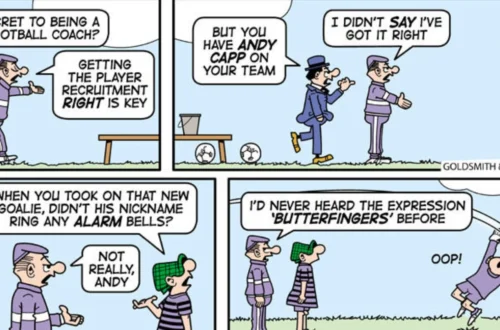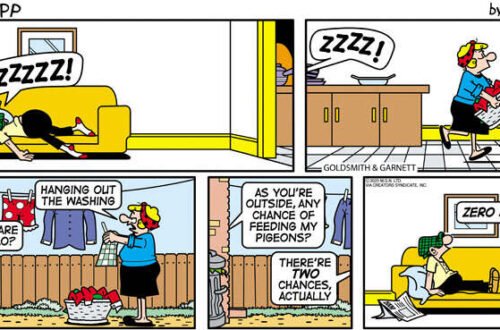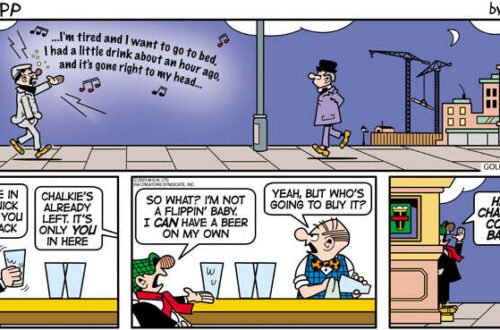
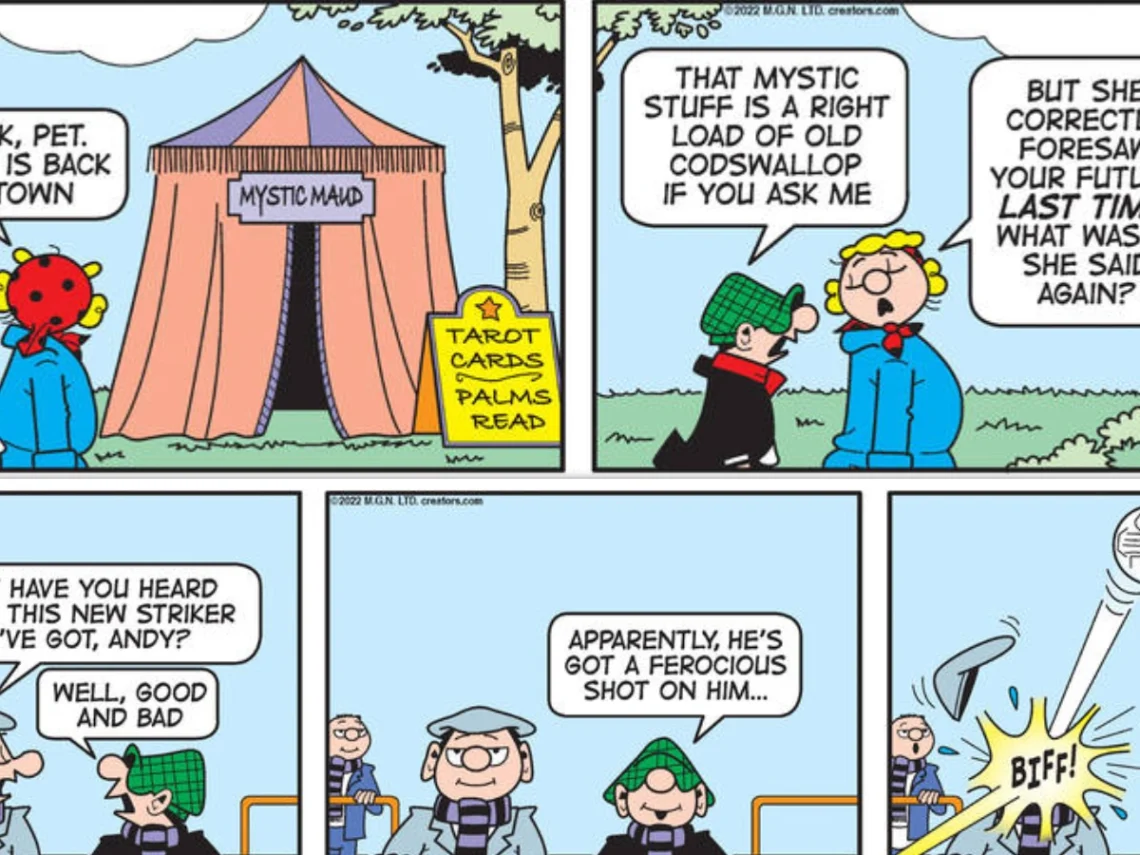
In the pantheon of great comic strip couples—from Blondie and Dagwood to Marge and Homer—none are quite as authentically combative, paradoxically devoted, or culturally resonant as Andy and Flo Capp. For over sixty years, their domestic battlefield, rendered in Reg Smythe’s deceptively simple lines, has offered a raw, hilarious, and enduring study of marriage. They are less a model of romantic bliss and more a monument to stubborn co-existence, a testament to the idea that love can thrive not in spite of constant conflict, but within its very fabric.
To understand their longevity is to move beyond the surface caricature of the lazy husband and the shrewish wife. Andy and Flo represent a deeply intricate, balanced ecosystem of push-and-pull, a dance of dysfunction that has captivated readers worldwide since 1957.
#1

#2

#3
#4
#5

#6

#7

#8

#9

#10

The Dynamic of Opposition: A Perfectly Balanced Scale
At first glance, their roles seem rigidly defined. Andy is the id incarnate: a committed slacker, a pub philosopher, a cunning schemer whose primary life goals are avoiding work, betting on football, and securing his next pint. His physicality is all slumped shoulders and slouched repose, a man for whom any vertical effort is a personal affront.
Flo, in stark contrast, is the super-ego: pragmatic, industrious, and perpetually exasperated. She is the manager of a household perpetually on the brink of financial collapse, armed with a rolling pin and a withering glance. She is the anchor to Andy’s helium balloon of irresponsibility.
Yet, to reduce them to these types is to miss the genius of Smythe’s creation. Their opposition is not a flaw in their relationship; it is its foundation. Andy’s entire existence is a performance for which Flo is the essential, exasperated audience. Without her scolding, his dodges would have no meaning. Without his provocations, her resilience would have no purpose. They are locked in a symbiotic struggle, each defining the other.
Beyond the Battle: The Grammar of Their Bond
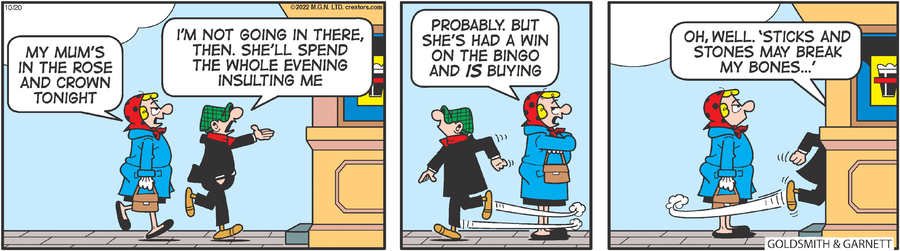
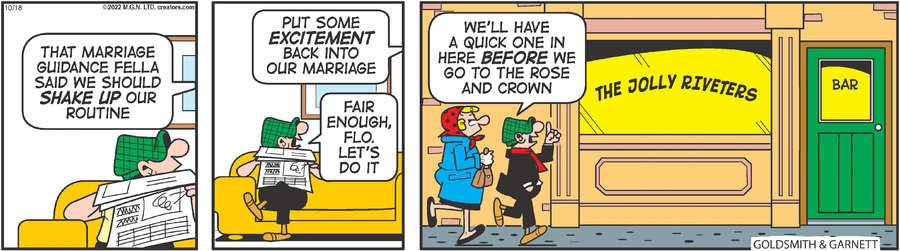
What elevates Andy and Flo above mere farce are the subtle moments that reveal a genuine, if unconventional, bond. Their language is a unique dialect of insult-as-endearment.
- The Economy of Care: Flo will berate Andy for his stupidity while simultaneously nursing his hangover or patching up his injuries from a botched bet. Her care is never expressed through sentiment, but through action—often grudging, but always present.
- The Reluctant Admiration: Andy, for all his moaning, is utterly dependent on Flo. He respects her strength, even as he constantly tests it. His compliments are backhanded—a grunt of approval at her cooking, a rare admission that she “might be right this once.” In one famous strip, when asked if he’d marry Flo again, he replies, “Let’s put it this way… if I had me time over again, I’d make the same mistake.” For Andy, this is poetry.
- Shared Culture & Code: They are products of the same working-class Northern English environment. They understand the same struggles, the same humor, the same unspoken rules. Their battles are played out on a shared stage. When an external threat appears—a condescending official, a nosy neighbor—they can, on rare occasion, present a united, magnificently sarcastic front.
Evolution Amidst Consistency: Weathering Social Change
A key to their endurance is the strip’s subtle evolution. While Andy’s core laziness is immutable, Smythe and later writers allowed the characters to breathe with the times. Flo, initially more of a passive scold, gradually gained agency. She got a job, developed friendships outside the home, and her comebacks grew sharper and more self-assured. The dynamics of power shifted from a simple tyrant/victim model to a more nuanced, if still chaotic, negotiation between two stubborn individuals.
Andy, too, showed flickers of vulnerability—genuine concern when Flo is ill, or pride in her rare moments of triumph. This capacity for small growth prevented them from becoming fossilized stereotypes and allowed new generations to see their own relational struggles reflected in the Capps’ eternal squabbles.
Why They Endure: The Universal in the Specific
Andy and Flo endure because they are profoundly real. They represent a marriage stripped of Hollywood gloss—a partnership built on managed expectations, tactical arguments, and deep, familiar intimacy. Readers see in them the exhausting but enduring nature of long-term commitment, the humor in frustration, and the love that can be expressed through a perfectly timed sigh or the unspoken understanding that, for all his flaws, her Andy is a devil she knows and, in her own way, cherishes.
They are not #relationshipgoals. They are relationship reality: messy, loud, stubborn, and ultimately unbreakable. In the grand comedy of marriage, Andy and Flo Capp remain the most relatable headliners, proving that sometimes, the strongest love is the one that can withstand—and even thrive on—a daily dose of comic warfare.