The room was sterile and cold, a place where hope came to die. Dr. Evans removed his glasses, polishing them with a slow, deliberate motion that felt like an eternity to Arthur, the man sitting opposite him. The fluorescent lights hummed overhead, a monotonous soundtrack to the worst moment of Arthur’s life.
“Arthur,” the doctor began, his voice soft but heavy, “the results of the tests are conclusive. It’s a very rare, very aggressive form of retroviral encephalitis. I’m sorry.”
Arthur just stared, the words washing over him like ice water. “Sorry? What do you mean, sorry? Give me the bottom line, Doc. Don’t sugarcoat it.”
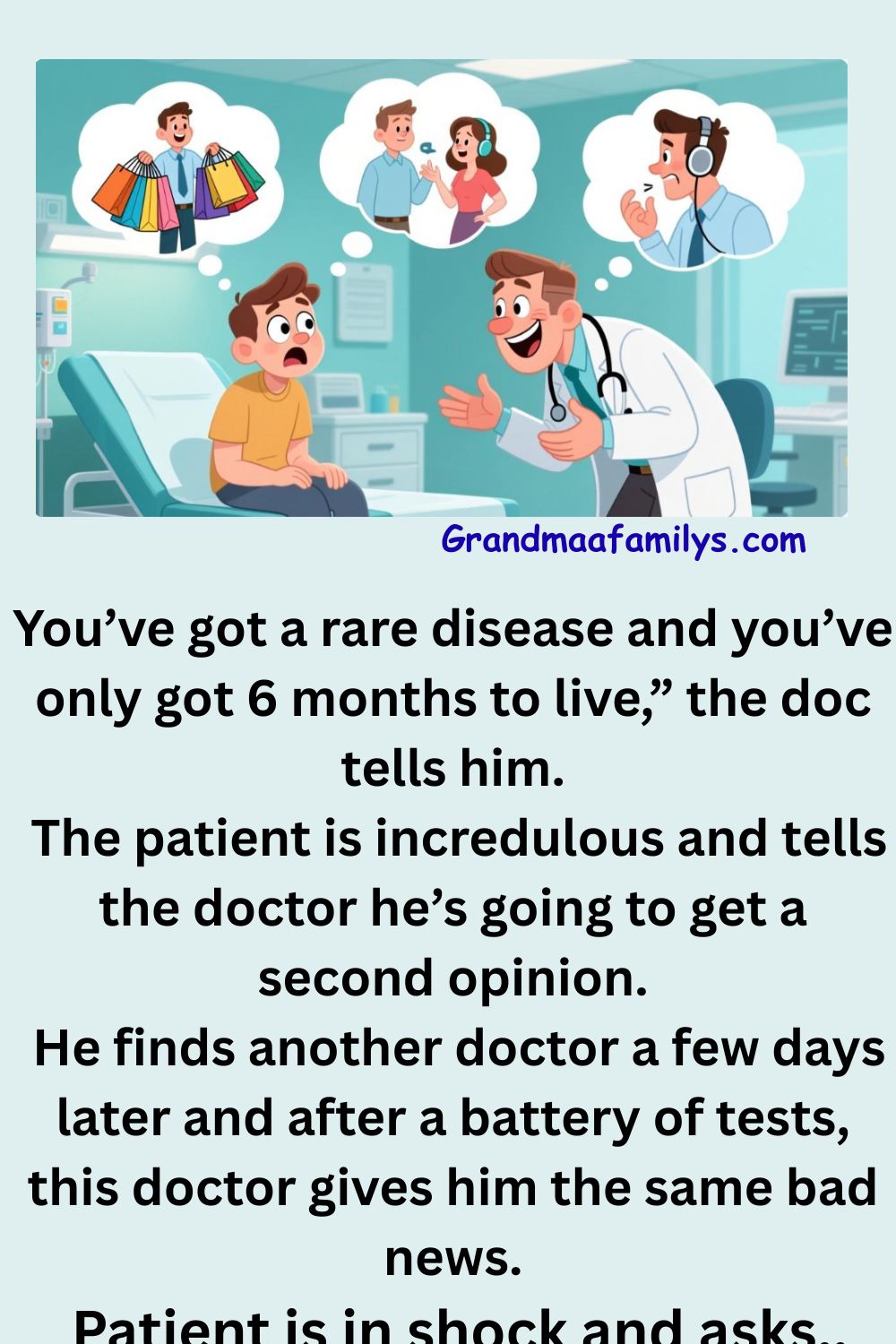
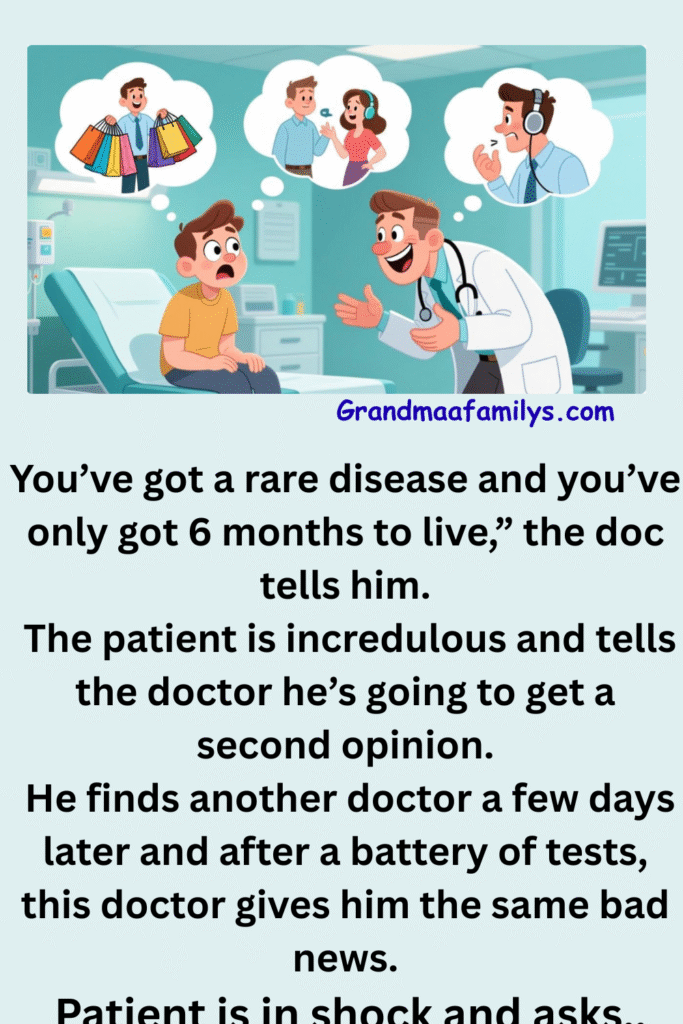
Dr. Evans met his gaze, his eyes filled with a professional pity that was somehow worse than anger. “The bottom line is that without a miracle, you’ve got about six months to live.”

The world tilted on its axis. Six months. The phrase echoed in the sudden, roaring silence of Arthur’s mind. He saw his unfinished novel, the trip to Italy he’d always planned, the quiet evenings with a cat he didn’t even own yet—all of it dissolving into mist.
“No,” Arthur said, his voice a dry rasp. “No, that’s impossible. I feel fine. You’re wrong. I’m getting a second opinion.”
Dr. Evans simply nodded. “Of course. I encourage it.”
The next few days were a blur of frantic phone calls and desperate appointments. Arthur found himself in the office of Dr. Anya Sharma, a renowned specialist with a reputation for turning medical impossibilities on their head. She ran a battery of tests that made Arthur feel like a human pincushion. He endured scans, biopsies, and enough blood draws to make him dizzy, all clinging to a sliver of hope that Dr. Evans was just a pessimistic old fool.
But when he sat in Dr. Sharma’s office a week later, he saw the same look on her face. It was a quiet, somber expression that confirmed his deepest fears.
“Mr. Hale,” she said gently, “I’ve reviewed all your results. I wish I had a different answer for you, but Dr. Evans’s diagnosis was correct. The timeline is, unfortunately, accurate.”
The sliver of hope shattered. Arthur felt the air leave his lungs, and a profound, bone-deep shock set in. This was real. This was happening. He was a man with an expiration date.
“Is there… is there anything I should do?” he asked, his voice trembling. “Anything at all? I’m desperate.”
Dr. Sharma leaned forward, her steepled fingers resting on her desk. She hesitated, a flicker of something unreadable in her eyes. “Medically, we can focus on palliative care to keep you comfortable. But… can I give you some non-medical advice?”
“Sure!” Arthur said, grasping at the draw like a drowning man. “Anything, Doc! I’ll try anything!”
The doctor studied him for a long moment. “Do you have a girlfriend? A significant other?”
Arthur let out a short, bitter laugh. “Nope. Been single for years. My work is my… well, it Was my life.”
A small, almost imperceptible smile touched Dr. Sharma’s lips. “Well,” she said, her tone shift from clinical to something almost conspiratorial. “I strongly encourage you to find a girlfriend. And I don’t mean just casually date. I mean, go all in. Go shopping with her for hours on end, holding her purse while she tries on seven different shades of the same shirt. Listen patiently to all of her complaints about her coworkers, her friends, the barista who got her order wrong. Get involved with every single thing she does. Go to her yoga class, her book club, her cousin’s boring Tupperware party. Completely immerse yourself into her life. I mean, Every aspect of it you can.”
Arthur stared at her, bewildered. The advice was so bizarre, so specific, that a tiny, foolish park of hope appointed in his chest. It was a long shot, a crazy folk remedy, but what did he have to lose? Maybe it was about the power of human connection, about love having a physical effect that could fight the disease.
He sat up straighter, a feeling of desert optimism washing over him. “Will that extend my life?!” He asked, his voice filled with a renewed sense of purpose.
Dr. Sharma leaned back in her chair, her expression perfectly neutral.
“No,” she said flatly. “But it’ll be the longest damn six months you’ve ever had.”