
Drive through the rolling, emerald-green countryside of Pennsylvania, Ohio, or Maryland on a quiet afternoon, and you’ll see them. Silhouetted against the vast, open sky, they are large, five-pointed stars fastened high on the weathered sides of barns. Some are a deep, commanding red or a rustic, solemn black; others are a soft, hopeful blue or a pristine, weathered white. To the casual eye, they’re just charming, rustic decorations—a nod to a simpler time. But these “barn stars” are far more than that. They are silent sentinels, holding within their geometric shape centuries of history, profound belief, and the quiet craftsmanship of generations.
Where the Tradition Began: A Promise in a New World
The story of the barn star begins across the Atlantic, with the waves of German-speaking settlers who arrived in America seeking freedom and a new life. Known as the Pennsylvania Dutch, these communities brought with them not just tools and seeds, but a rich tapestry of folk traditions and a deeply spiritual worldview. In the 17th and 18th centuries, the American frontier was a place of both immense promise and profound uncertainty. To these hardy families, a star was not merely art; it was a powerful symbol of faith, a plea for fortune, and a sacred ward of protection.
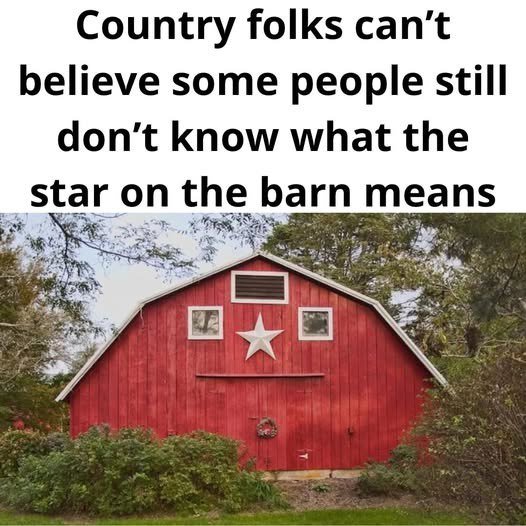
Families would paint or hang these celestial emblems on their most important structure—the barn—to bless their land, safeguard their livestock, and guard their homes against the specters of misfortune, fire, and disease. Each design was intensely personal, a unique fingerprint. A farmer’s star was a mark of identity and a quiet signature on the landscape, a declaration that seemed to say, “This is our land. This is our story. Under God’s watchful eye, we are here to stay.”
The Meaning Behind the Colors: A Palette of Prayer
In the hands of the Pennsylvania Dutch, color was never an afterthought. It was a language, a palette of prayer, with every shade carrying a specific purpose and emotion. This silent code turned each barn into a canvas of hope:
- A bold, defiant Red was a plea for strength and a beacon for good fortune, a vibrant heart beating against the wooden planks.
- A serene, deep Blue called for peace and divine protection, a piece of the heavens brought down to earth.
- A lush, fertile Green celebrated the land, a prayer for bountiful harvests and the growth of family and flock.
- A stark, protective Black was used to absorb and ward off evil spirits and negative energy.
- A pure, clean White represented faith, purity, and the hope for a clean slate.
Even the combinations held a deeper meaning. A red star outlined in black was more than just a design choice; it was a powerful symbol of courage protected by divine power, a shield for the soul.
From Faith to Folk Art: The Journey of an Icon
In those early, close-knit communities, barn stars were not made for show. They were carved from wood, hand-forged from metal, and meticulously painted—each one unique to the family that created it, often passed down like a treasured heirloom. But as the country grew and the world sped up, the spiritual meaning began to soften, evolving into something broader.
By the mid-1900s, the barn star had transcended its origins. It appeared in mail-order catalogs and on the sides of farmhouses far from the Pennsylvania Dutch country. It became a beloved symbol of rural pride, of craftsmanship, and a nostalgic nod to a slower, more grounded way of life. The star was no longer just a prayer; it was a connection to a shared American heritage.
A Star That Endures: A Timeless Reminder
Today, the barn star is more popular than ever. You’ll find them not just on weathered barns, but on suburban porches, in modern country homes, and even inked as tattoos. They connect people to a sense of roots, to a time when a family’s fortunes were tied directly to the land and their faith.
To those who still hang them, barn stars are more than just rustic décor. They are emblems of protection, beacons of tradition, and symbols of resilience. They are a timeless reminder that even as the world changes at a dizzying pace, some symbols still shine with a profound and steady meaning.
Each star tells a quiet story, passed down on the wind—a testament to the enduring power of faith, family, and hard work, a promise that these values, like the stars themselves, will never truly fade.