There’s a certain time machine hidden in the pages of old newspapers and dusty book collections It doesn’t have buttons or a flashing flux capacitor. Instead, it’s powered by the boundless imagination of a six-year-old boy and his ever-loyal tiger. We’re talking, of course, about “Calvin and Hobbes.” To open a “Calvin and Hobbes” comic strip is to be instantly transported back to a time of snow days, summer afternoons that last forever, and a world where your best friend was both a stuffed animal and a ferocious tiger Be warned: what follows are scenarios that may trigger a sudden, overwhelming, and utterly delightful wave of nostalgic laughter. 😂
The Art of the Snowman: When Winter Became a Canvas
For most of us, a snow day meant building a standard, three-balled snowman with a carrot nose and a scarf. For Calvin, a fresh blanket of snow was a pristine canvas, a gallery waiting to be filled with macabre masterpieces. His snowmen weren’t just cheerful figures; they were scenes of chaos, tragedy, and dark, hilarious comedy. ⁇ ️
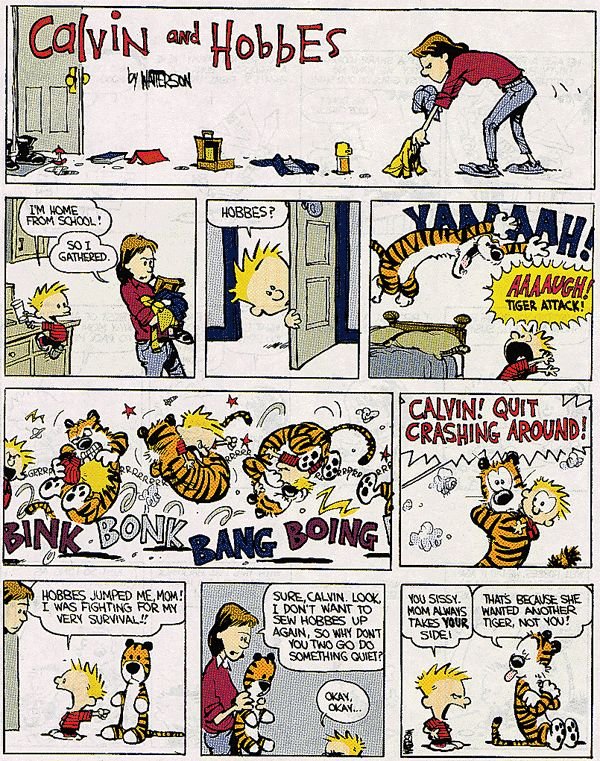
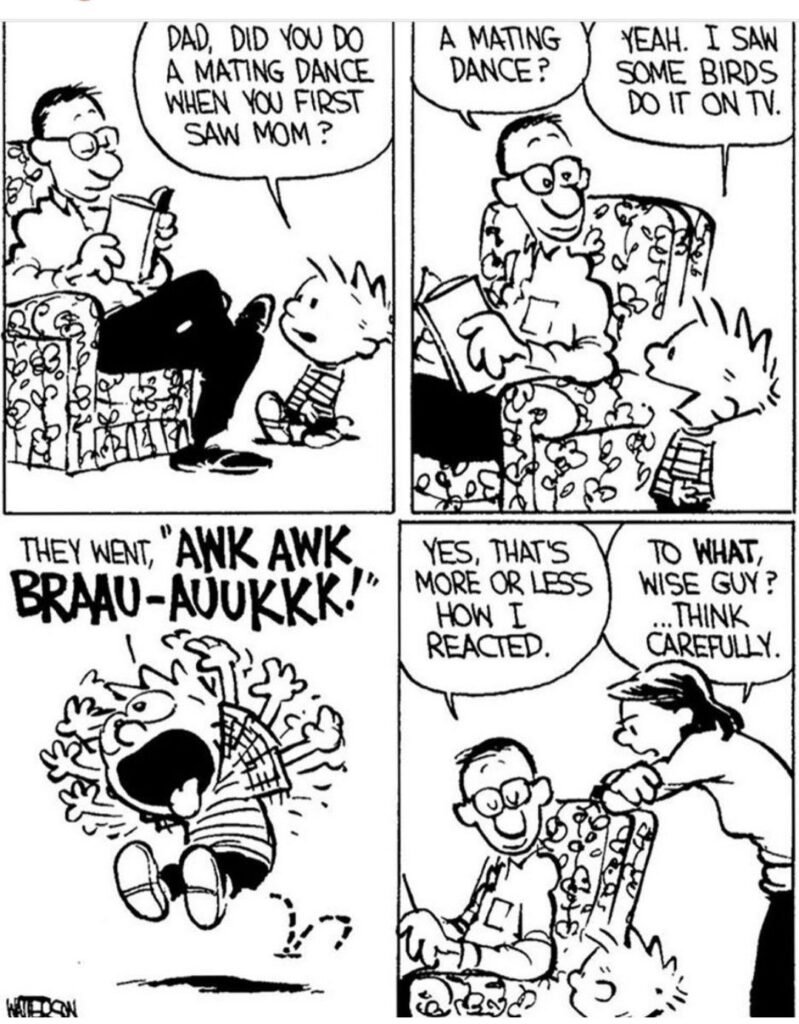
10+ Calvin & Hobbes Scenes May Cause Sudden Nostalgic Laughter
#1
#2
#3
#4
#5
#6
#7
#8
#9
#10
Who could forget the panel of snowmen being gruesomely run over by a snowplow, or one snowman offering another a snow cone made from his own head? These weren’t the creations of a typical child; they were the work of a demented genius. Calvin’s artistic vision was a perfect blend of childhood innovation and a surprisingly sophisticated, morbid wit
The The emotional Core of these scenarios is pure, unadulterated creativity. Calvin saw the world differently. He didn’t just see snow; he saw potential. He saw a medium for expression. This resolution with the evergreen Part of us that misses the freedom to create without rules or judgment. It reminds us of a time when a rainy day or a snowy yard wasn’t an inconvenience, but an invitation to build a world of our own making. The laughter these scenes provoke is nostalgic because it’s the sound of our own childhood imagination, set gloriously free.
The Duplicator: A Child’s Brilliant Solution to Life’s Problems
Every kid has faced the universal read: a clean bedroom, a pile of homework, or a boring piano lesson. And every kid has disappeared for a magic way out. Calvin didn’t just wish; he invented. With a cardboard box, he created the Duplicator, a machine capable of cloning himself. The result, of course, was not a helpful army of Calvins, but a chaotic message of mischievous duplicates who caused even more trouble 📦
The scene where Calvin confronts his clones, each one as sarcastic and lazy as the original, is a masterclass in comic irony. He tries to reason with them, to order them around, only to realize he has perfectly replicated his own defiant nature It’s a hilarious feedback loop of childhood rebellion.
This is where the emotional Connection deepens. We laugh because we’ve been there. We’ve desperately wanted an easy way out of our responsibilities. Calvin’s struggle with his clones is a metaphor for our own internal battles—the part of us that wants to work versus the part that wants to play. It’s a story about the consequences of our own desires, told with the brilliant simplicity only a child could devise The nostalgia hits because it reminds us of that brilliant, if flawed, childhood logic that believed any problem could be solved with a cardboard box and a little bit of imagination
Spaceman Spiff: The Heroic Escape from a Mundane World
Someimes, reality is just too much to handle. A boring car ride, a tedious bath time, or a trip to the grocery store can feel like an intergalactic prison. For Calvin, the solution was simple: become Spaceman Spiff, the intrepid explorer of the cosmos. Suddenly, his bedroom wasn’t a messy room; it was the surface of a distant planet. His teacher wasn’t Miss Wormwood; she was a slimy, six-eyed alien Zorg. 🚀
The beauty of these scenarios is the seamless transition between reality and fantasy. We see the world as it is—a bath with a rubber duck—and then we see it through Calvin’s eyes—a heroic struggle against a hideous monster in a bubbling cauldron. The contrast is where the magic and the laughter live.
This is the ultimate evergreen fantasy. Who hasn’t daydreamed their way out of a dull moment? Calvin’s adventures as Spaceman Spiff are a powerful testament to the human spirit’s need for escape and wonder. They remind us that we have the power to transform our reality, to find adventure in the ordinary, and to be the hero of our own story. The nostalgic laughter comes from remembering a time when our own imaginations were our most powerful vehicle, capable of taking us anywhere in the universe, no spaceship required.
The Transmogrifier: Embracing the Absurdity of Change
The cardboard box strikes again! This time, it’s not a Duplicator, but a Transmogrifier, a machine that can turn Calvin into anything he desires. Usually, this meant transforming into a tiger to live a life of wild freedom, or sometimes, an owl to avoid his homework. The sheer, unadulterated joy of these scenes lies in their complete and utter absurdity. Calvin doesn’t question the logic; he simply embraces the magic. 🐅
One of the most iconic moments is when he and Hobbes use the Transmogrifier together, turning into dinosaurs or other creatures, their world instantly becoming a prehistoric playground. It’s a celebration of friendship and shared imagination at its peak.
This taps into a deep, emotional Wellspring of nostalgia for a time when change seeded exciting and full of possibility. As adults, we often fear change. For Calvin, it was a game. It was a way to explore different faces of himself and the world. The Transmogrifier is a beautiful metaphor for the fluidity of identity in childhood. The laughter it provokes is a happy memory of a time when we believed we could be anything, do anything, and that a simple cardboard box was all the technology we need to make it happen.
The Final Strip: A Quiet Moment of Pure Magic
After years of chaotic adventures, philosophical debates, and nostalgic laughter, Bill Watterson gave us a final strip that is arguably the most powerful of all It’s winter. The world is covered in a pristine blanket of snow. Calvin and Hobbes are on their led, poised at the top of a hill. Calvin says, “It’s a magical world, Hobbes, ol’ buddy. . Let’s go exploring!” And they fly down the hill, into a vast, white, endless expanse. 🛷
There are no jokes here. No chaos. Just a quiet, found moment of wonder and friendship. It’s the perfect ending, not because it wraps everything up, but because it opens everything up It suggests that their adventures are far from over; they are just beginning.
This scene is the ultimate trigger for nostalgic laughter, but it’s a different kind. It’s a laughter that’s mixed with a tear, a warm feeling of gratitude for the journey we took with them It captures the very presence of childhood: a world full of magic, waiting to be explored with your best friend by your side It’s a reminder that even when the comic strips end, the spirit of imagination and wonder lives on within us all.
Revisiting the world of Calvin and Hobbes is like coming home. The laughter they inspire isn’t just funny; it’s a warm hook from your past, a reminder of the boundless creativity and joy that once defined your world. These scenarios are more than just comics; they are tiny, perfect time capsules. Now, the led is poised, and the hill is waiting. Which of these iconic scenes sent you on a trip down memory lane? Is there a specific Calvin and Hobbes comic that you hold dear, a moment that perfectly takes your own childhood spirit of adventure? Share your favorite memories in the comments below! 👇 ️